










 |
Purang: a bordering region between Tibet, Nepal, and India
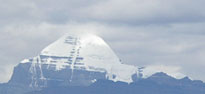
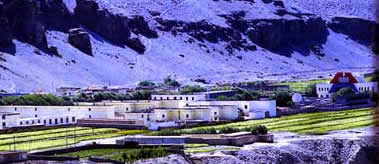
Purang is one of the three regions of Ngari, situated to the south of Kailash, bordering Nepal and India. The population of Purang County is 7,123 and it covers an area of 12,497 square kilometers. The villages of Purang lie in a valley between the giant Mount Namonanyi and the Abi mountain ranges. Purang, therefore, is known as the region surrounded by snow-covered mountains. Maja Khabab (Karnali River), one of the four great rivers of Ngari, flows through the villages of Purang and into Nepal. For centuries, Purang has been known as a center for foreign trade and a source of food supplies for the people of Ngari and pilgrims to Mount Kailash and Manasarovar. During the summer and autumn, Purang is an interesting small market town where Tibetans, Chinese, Nepalese and Indian traders gather to sell different products from their countries. During the winter and early spring, the paths and the road to Purang are regularly blocked by heavy snow storms and the region remains in complete isolation. Main visitors' Attractions
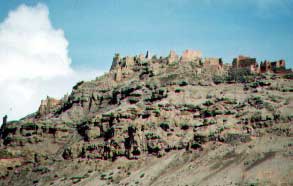
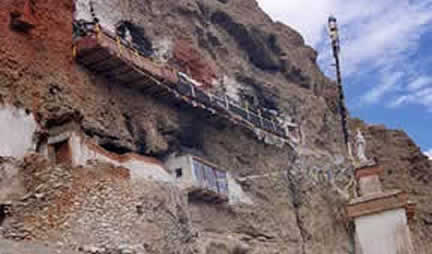
Tegla Kar and Shambuling Gonpa remains only as a ruin, following the Cultural Revolution (1967-1976) in Tibet. It appears the name Tegla Kar (Lying Tiger Fort) was used during the time of the Purang Kingdom. Locally, Purang is also known as Tegla Toke. When the Kingdom ended, the fort eventually became a monastery and was renamed Shambuling Gonpa. On the same spot there was a Sakyi monastery. In 2003, Shambuling Monastery was rebuilt by Trugo Lama, Lobsang Samten, and there are now five monks in charge. Looking back at the history of Purang, Tegla Kar or Shambuling Gonpa was both the headquarters of the Purang Jong (district) and also a monastery of 100 rooms, built on top of a mountain and looking down the Purang valley. There were over 70 district governors, starting with Bon Gre-pa in 1817 and ending with Ngagwang Choethar and Norbu Wangdue in 1959. Before then, it was the fort of the Purang Kingdom, which began in the 10th century with King Kori, one of the two sons of Tashi Gon, King of the Guge Kingdom. Tagtse Kribar is the best-known ruler of the Purang kingdom, which is believed to have ended in the 15th century. Tegla Kar was built during the Shang-Shung dynasty (long before A.D.)
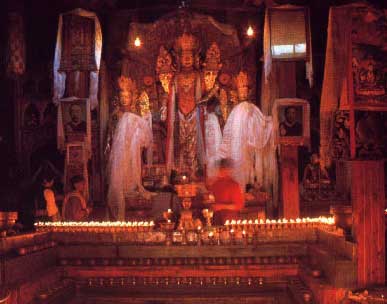
Khorchag Gonpa is the most unknown monastery in Purang. It houses the famous image of Khorchag Jo-O, one of three such images in Tibet. One of the others is at Jokang temple, in Lhasa, and the third one is now in India at the palace of His Holiness the Dalai Lama. The monastery contains so many great invaluable statues, dharma books, and other spiritual objects. Khorchag monastery is situated in the south of Purang County, 25 kilometers from the border between western Tibet and northwestern Nepal. During the Cultural Revolution, some parts of the monastery buildings survived and were re-opened in 1982 after the Chinese Government introduced the "Freedom of Religion" policy. Now, there are 25 monks who are responsible for performing religious duties in the monastery, maintaining, developing and promoting the monastery. Would you like to know more about the monastery?
Gongphur monastery is also in Purang County. It is one of only few monasteries in Ngari which house a great number of undamaged sacred objects that were saved during the Cultural Revolution. The main objects in the monastery are a standing Ache (metal sculpture) Choekyi Dolma, Khyabpa Chimchema - which is known to be a speaking image - and many enlightened images as well as some beautiful wall painting. The preciousness of the objects is not judged by the value of the materials, but rather by the number of generations of enlightened beings and faithful worshippers who have blessed and prayed to them. Would you like to know more Gongphur? Khyi Tor (Lost Dog) is a sacred cave underneath a mountain, in the south of Purang County. According to local oral history, a lost dog was found at Dombu, in the north of Nepal. The door to the cave only opens in the Year of the Dog, according to the Tibetan lunar calendar, that is, once every twelve years. The rest of time, the door is closed by ice during the winter and spring and by a river during the summer and autumn. People who have been on pilgrimage to Kyi Tor, say that there are a number of natural images including a mandala, a drum, a Guruta, elephants, Tsok offerings, a Tseral, a stupa, vessels and many other things there. The ice and crystalline stones inside the cave reflect the light and many objects can be viewed only through the ice. There are also hundreds of caves, which have been used for retreats. The Current Administrative System In Purang
Life In Purang
The current problem for the people is the low price of barley and beans and their increased need for money. One kilogram of barley sells for only 1.4 yan (in Chinese currency), whereas 1 kilogram of rice costs 4.6 yan and 1 kilogram of flour costs 3.2 yan. Rice and grain doesn't grow in Purang (altitude 4137 meters) and mustard and vegetables such as potatoes, radishes and lettuce can only be sold to a small number of local people.
| |
|
|||||||||||||||||||||||||||||||||||||||
 There
are seven counties in the prefecture of Ngari: Purang Shen, Ruthog
Shen, Guge (Zha-de) Shen, Tso-Chen Shen, Gartse Shen, Garges Shen
and Tshaga Shen. Purang is the main source of agricultural products
and the rest of the counties are mainly inhabited by nomadic families.
Purang County has three Chus (municipal districts): Shingpa-chu,
Hor-chu and Bharka-chu. Shing-pa Chu is the administrative center
for six Shangs (a Shang is a group of villages) in Purang: Kyithang,
Khorchag, Shede, Khrite, Toyo, and Rigung. The six Shangs together
make Purang. The villagers of Purang are farmers, mainly growing
barley, beans, mustard and vegetables. They also have a number of
domestic animals, including horses, cows, goats, donkeys, sheep
and yaks. Hor-Chu and Bharka-Chu are the center for the nomadic
families in Purang County. Each municipal district has four Rukhags,
(a Rukhag is a number of nomadic families). The nomads have yaks,
horses, sheep and goats, and they produce meat, butter, wool, animal
skins and cheese.
There
are seven counties in the prefecture of Ngari: Purang Shen, Ruthog
Shen, Guge (Zha-de) Shen, Tso-Chen Shen, Gartse Shen, Garges Shen
and Tshaga Shen. Purang is the main source of agricultural products
and the rest of the counties are mainly inhabited by nomadic families.
Purang County has three Chus (municipal districts): Shingpa-chu,
Hor-chu and Bharka-chu. Shing-pa Chu is the administrative center
for six Shangs (a Shang is a group of villages) in Purang: Kyithang,
Khorchag, Shede, Khrite, Toyo, and Rigung. The six Shangs together
make Purang. The villagers of Purang are farmers, mainly growing
barley, beans, mustard and vegetables. They also have a number of
domestic animals, including horses, cows, goats, donkeys, sheep
and yaks. Hor-Chu and Bharka-Chu are the center for the nomadic
families in Purang County. Each municipal district has four Rukhags,
(a Rukhag is a number of nomadic families). The nomads have yaks,
horses, sheep and goats, and they produce meat, butter, wool, animal
skins and cheese. 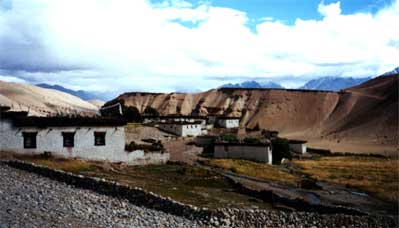 Purang
is one of the few places in Tibet where the people produce a large
quantity of barley. This is used to make Tsampa (roasted barley
flour) and Chang (barley wine). The people of Purang are known for
their generosity in giving Tsampa to pilgrims visiting the sacred
Mount Kailash and Manasarovar Lake. These long-stay Tibetan pilgrims
go to Purang to beg for Tsampa, butter, tea and other food supplies.
The farmers of Purang are very proud to be able to provide food
for the pilgrims, as donating their own possessions is one of the
root practices of Buddhism.
Purang
is one of the few places in Tibet where the people produce a large
quantity of barley. This is used to make Tsampa (roasted barley
flour) and Chang (barley wine). The people of Purang are known for
their generosity in giving Tsampa to pilgrims visiting the sacred
Mount Kailash and Manasarovar Lake. These long-stay Tibetan pilgrims
go to Purang to beg for Tsampa, butter, tea and other food supplies.
The farmers of Purang are very proud to be able to provide food
for the pilgrims, as donating their own possessions is one of the
root practices of Buddhism.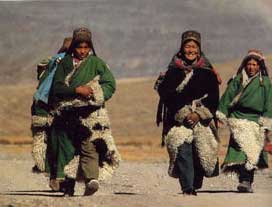




| All contents of this website © 2005 Kailashzone Charitable Foundation |
